
“Why is my marketing not working?” It’s one of the most common things we hear from clinic owners. They have a website. They run ads. They post on social media. But patients still aren’t coming in the way they should.
Here’s what we’ve found after working with clinics all over the country: it’s not about doing more, it’s about having a complete system.
The short version: Most clinics are missing one or more key pieces of their marketing. When one piece is broken, the whole thing falls apart. The best clinics treat their marketing like a system, where every part works together. In this post, we’re going to walk through what that system looks like, and how you can use it to grow your clinic.
Watch the Full Webinar Here -> The Marketing Auditory System
What We'll Cover
- The Big Problem: Incomplete Marketing
- Think of It Like the Ear
- Step 1 — Get Seen (The Outer Ear)
- Step 2 — Convert Visitors Into Leads (The Middle Ear)
- Step 3 — Educate and Prepare Patients (The Inner Ear)
- Step 4 — Use Your Data to Make Smart Decisions (The Auditory Nerve)
- Step 5 — The In-Clinic Experience (The Brain)
- What Happens When One Part Fails?
- Real Results: A 30% Revenue Increase
- New Tools We’re Rolling Out in 2026
- FAQ
- About the Author
The Big Problem: Incomplete Marketing
We’ve worked with a lot of clinics. And here’s what we see over and over again.
A clinic might have great ads. But there’s no follow-up system. So leads come in — and then nothing happens. No one calls them back fast enough. They don’t get any education before their appointment. They show up not knowing what to expect, and they leave without starting treatment.
Or a clinic has a great website but no ads driving people to it. Or they have automation but no data to show what’s actually working.
The point is: you need all the pieces working together. One strong piece isn’t enough. And that’s what this blog is about.
Think of It Like the Ear
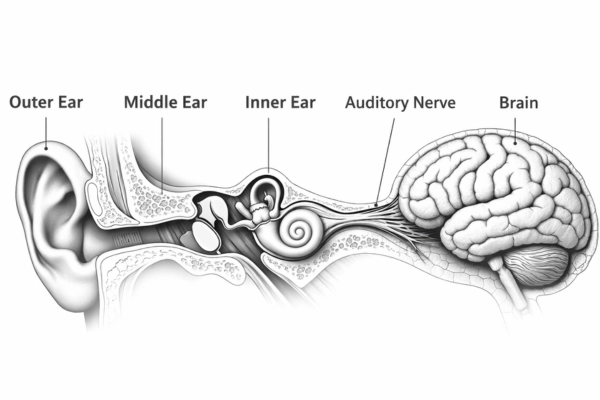
Here’s a helpful way to think about your marketing system. Think about how the ear works.
Sound comes in through the outer ear. It moves to the middle ear, then the inner ear. The auditory nerve sends signals to the brain. Every part has a job. If one part stops working, you can’t hear.
Marketing works the same way. If one part of your system is broken, things break down. You might get leads but not convert them. You might convert them but not keep them. The whole system needs to be healthy.
So let’s walk through each part, and what it means for your clinic.
Step 1 — Get Seen (The Outer Ear)
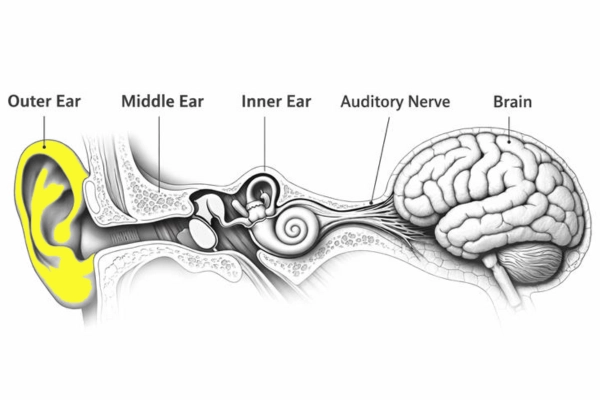
The outer ear collects sound. In marketing, this is how people first find out about your clinic. This is called top of funnel— getting attention and capturing leads.
There are four main ways to do this:
Local SEO helps people find you on Google. When someone searches “hearing aids near me” or “tinnitus treatment,” you want your clinic to show up. There are two places you can show up — the map pack (powered by your Google Business Profile) and the regular search results (powered by your website). Both matter. The map pack usually shows up first, so keeping your Google Business Profile updated with photos and reviews is a must.
AI is also changing how people search. People are now asking questions in tools like ChatGPT and Google’s AI overview. Your clinic can show up in those results too — but only if your website is set up the right way. One big piece of that is something called schema markup. Think of it like this: if a patient came in and spoke a different language, you might be able to get the point across, but it would be hard. Schema is how you speak Google’s language. It tells AI tools exactly what your site is about, so they trust you and show you in results. Learn more about how we handle AI SEO for audiology clinics.
Digital ads let you reach people who aren’t even searching yet. They’re scrolling on Facebook or Instagram — and your ad shows up. This gets you in front of patients earlier in their journey. See how our digital lead generation works.
Social media builds trust over time. When you post helpful content regularly, people start to see you as the expert. They follow you. They learn from you. And when they’re finally ready to get help, you’re the first person they think of. We can handle that for you — check out our social media management service.
Step 2 — Convert Visitors Into Leads (The Middle Ear)
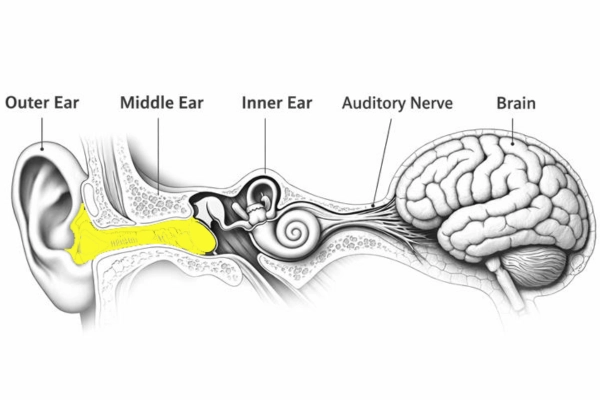
The middle ear takes sound and makes it stronger so the brain can use it. In marketing, this is your website — it takes the attention you’ve captured and turns it into action.
Your website is the foundation of everything. Your ads link to it. Your Google profile links to it. Your social media links to it. If your website isn’t good, all that effort is wasted.
Here’s what a high-performing website does:
First, it addresses the patient’s problem. Not with hearing aid brands or widget specs — but with what the patient actually cares about. Things like: “Will I be able to hear my grandkids again?” or “Can I stop this ringing in my ears?” People don’t care about the device. They care about what life will feel like when the problem is fixed.
Second, it provides a solution. After explaining the problem, tell them how you can help. Make it simple and clear.
Third, it shows why you’re the right choice. Talk about your experience. Share what sets you apart. If you’re listed on sites like MyTinnitusNumber.org or part of the Excellence in Audiology network, say so. That’s a trust signal.
Fourth, it makes the next step easy. A big button that says “Take the Next Step” is better than something confusing. Give them a simple form. Tell them exactly what happens after they fill it out.
Want to see what a high-converting audiology website looks like? Learn about our website solutions.
Step 3 — Educate and Prepare Patients (The Inner Ear)
The inner ear converts sound into signals the brain can understand. In marketing, this is your automation system — it educates leads so they’re ready to say yes when they walk through your door.
Here’s the basic idea. When someone fills out a form or clicks an ad, they become a lead. But most of them aren’t ready to buy yet. They need more information. They need to trust you. They need to feel like they understand what they’re getting into.
Automation handles all of that for you — without your team having to do it manually.
Here’s what happens when a lead comes in:
- Your team gets notified right away
- The lead gets sent whatever they asked for — a book, a white paper, or more information
- They get added to a call list so your team can reach out within 10 minutes
- If no one’s available, an AI chatbot steps in to keep the conversation going and even book appointments
The leads who go through this process show up to their appointment already informed. They’ve already decided they want help. Your team doesn’t have to start from scratch — they just have to close.
Education also builds trust. When patients get helpful content from you before they ever walk in — books, videos, articles — they see you as the expert. And if they trust you, they trust you with their treatment.
Want to know more about how database marketing and automation works? We’ve got a full breakdown.

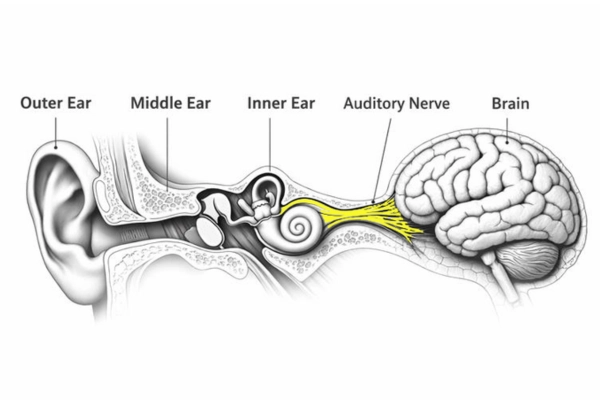
Step 4 — Use Your Data to Make Smart Decisions (The Auditory Nerve)
The auditory nerve carries signals from the ear to the brain. In marketing, this is your data — it carries information from your campaigns to your decisions.
If you can’t measure it, you can’t improve it.
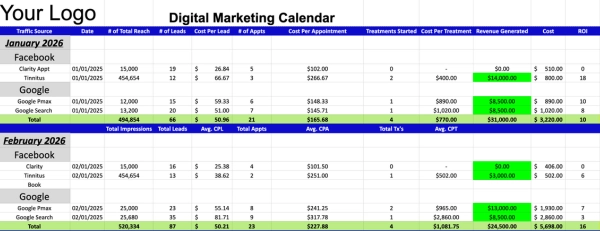
Here’s a real example. A clinic we worked with was running Facebook ads and Google ads at the same time. When we looked at the data, the Facebook ads were spending $598 and getting zero return. The Google search campaign was getting a much better return. Without that data, the clinic never would have known where to move the budget.
With data, you can answer questions like:
- Which ad is getting the best return?
- How much does it cost to get one appointment?
- How much revenue did this campaign generate?
When you know those numbers, you can make smart choices. You can put more money into what’s working and stop wasting money on what isn’t. It also makes growth predictable. Once you know your return on every dollar spent, you can scale up with confidence.
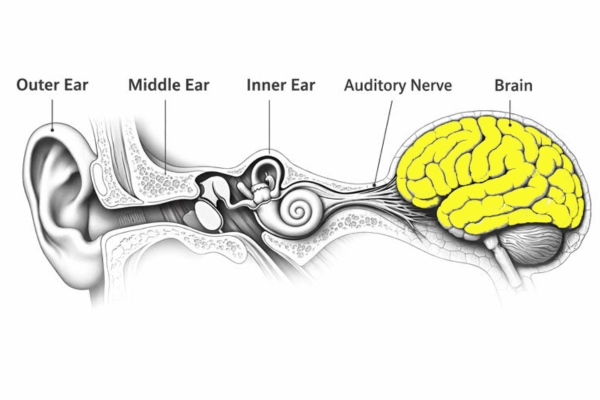
Step 5 — The In-Clinic Experience (The Brain)
The brain is where everything comes together and meaning is made. In marketing, this is your clinic experience — what happens when the patient walks in the door.
Marketing can fill your schedule. But what happens inside your clinic determines the lifetime value of that patient.
If your marketing system is working great but your call team doesn’t know how to handle leads — or your providers aren’t connecting with patients — you’ll have a gap. Patients will fall through.
That’s why marketing and team training have to work together. Marketing fills the schedule. Execution fills the bank account. Both are required for real, predictable growth.
What Happens When One Part Fails?
Think about it this way: your auditory system doesn’t work at half capacity. If you remove your eardrum, you lose your hearing. Same thing with your marketing.
- No ads? You’re not getting enough leads.
- Bad website? People visit and leave without doing anything.
- No automation? Leads go cold before you ever reach them.
- No data? You’re guessing where to spend your money.
- Poor clinic experience? Patients don’t come back and don’t refer others.
Every layer matters. The goal is to build a complete system — one where all the pieces work together.

Real Results: A 30% Revenue Increase
Randy Wohlers runs Family Hearing Center in Hawaii. He started working with Audiology Intelligence in 2024 using the full audiology marketing system.
From 2024 to 2025, his clinic revenue grew by 30%.
That’s what happens when the whole system is working. It’s not magic — it’s math. When you know your return on every dollar you spend, you can grow on purpose.
New Tools We're Rolling Out in 2026
We’re also excited about a few new things coming this year.
AI Voicemail Campaigns — We’re testing a tool that lets you record your phone staff’s voice once, and then use AI to generate new voicemail messages for any campaign — without re-recording every time. We played two examples in our webinar, and most people couldn’t tell which one was AI. It sounds just like your real team member. This makes it easy to run targeted voicemail campaigns without extra work for your staff.
Comorbidities Content — After our Scottsdale event focused on conditions linked to hearing loss (like dementia, falls, and heart health), we built out a full library of pages and content around comorbidities. If you want this added to your website or your automation, just ask.
Guaranteed Growth Listings — This is our Listings Package — getting your clinic listed on ExcellenceinAudiology.org, MyTinnitusNumber.org, and DefeatDementia.com, with ads running for you from those platforms in your local market. Because these feel like educational sites to patients (not sales pitches from a clinic), the leads are much cheaper and higher quality. We’re also building a Falls prevention site that will be a fourth listing option soon.
One more thing worth noting: Healthy Hearing is shutting down. If you’ve been listed there, that’s going away. Now is a great time to make sure you’re listed on our three platforms instead — and eventually four when the Falls site launches. Learn more about our base membership and what’s included.

Frequently Asked Questions
What if I already have a website and ads, isn't that enough?
Not always. Having ads and a website is a start, but if they’re not connected to an automation system, you’re likely losing leads. People need follow-up and education before they’re ready to book. A website and ads without automation is like having an outer ear and middle ear but no inner ear.
How do I know which part of my marketing is broken?
That’s what the data step is for. When you track cost per lead, cost per appointment, and revenue generated by each campaign, you can see exactly where things are falling apart. We help our members do this every month on their reporting calls.
Do I need a big team to run all of this?
No. That’s the point of automation, it handles the follow-up and education automatically. Your team still needs to work the call list and see patients, but the system does a lot of the heavy lifting.
What is schema markup and do I really need it?
Yes, you need it. Schema markup is code on your website that tells Google and AI tools exactly what your site is about. Without it, AI can kind of guess, but it’s not reliable. With it, you show up in AI search results and Google answers boxes. It’s one of the things we build into every website we create.
How is the AI voicemail tool different from a robocall?
It sounds like your actual staff member, because it’s trained on their voice. It’s not a robotic automated message. It sounds personal because it is. And it only plays when someone doesn’t answer, so it goes straight to voicemail. The patient hears their name and a message from “Chloe”, and it sounds completely real.
What happens if Healthy Hearing was my main listing site?
Healthy Hearing is shutting down, so any listing you had there will be gone. The good news is our Listings Package puts you on three national platforms, with a fourth coming soon, plus runs ads for you in your local market. It’s a better setup, and we can get you started quickly.
Calvin Hunsaker, B.S. Computer Science is a Website and SEO Specialist at Audiology Intelligence. Born and raised in Utah, Calvin graduated from Utah Tech University in 2024 and has since been building SEO-optimized, high-converting websites for audiology and hearing care practices across the country.
Calvin’s technical background in computer science combined with hands-on digital marketing experience gives him a unique edge, he builds websites that don’t just look good, they rank in search and turn visitors into patients. At Audiology Intelligence, every site he builds is designed with one goal in mind: patient acquisition.
Have questions about any of this? Reach out by email at info@audiology-intelligence.mystagingwebsite.com.
